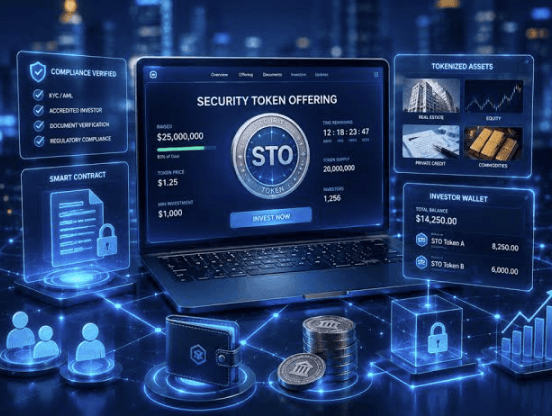
Security tokens encode digital ownership on a blockchain and embed regulatory expectations into programmable logic. Issuers and platforms must navigate governance, disclosure, and ongoing risk management with disciplined rigor. Frameworks center on investor protection, market integrity, and cross-border licensing harmonization. KYC/AML and investor accreditation must balance privacy with auditability, supported by practical playbooks that convert controls into repeatable processes. This requires careful data stewardship and auditable decision-making, leaving a critical pivot point for governance teams to confront evolving obligations.
What Security Tokens Are and Why Regulation Matters for Issuers
Security tokens represent digital representations of rights or ownership interests that are ultimately issued on a blockchain or similar distributed ledger, enabling programmable compliance and transfer controls.
The discussion centers on how these assets embed regulatory expectations into code, shaping issuer obligations and governance practices.
Security tokens demand robust governance, transparent reporting, and proactive risk management to satisfy regulatory compliance while preserving investor autonomy and freedom.
Key Compliance Frameworks Issuers and Platforms Must Follow
Navigating the landscape of security tokens requires adherence to a structured set of regulatory and governance frameworks designed to ensure issuer accountability, investor protection, and market integrity. Key frameworks emphasize governance controls, risk management, and transparent reporting, while compliance automation reduces manual oversight.
Cross border licensing emerges as a critical hurdle, demanding harmonized standards and rigorous interjurisdictional coordination to sustain scalable, compliant platforms.
KYC/AML, Investor Accreditation, and Disclosure Requirements
Privacy risks and cross border considerations shape data handling, consent, and audit trails, ensuring governance remains vigilant, proportionate, and resilient within freedom-oriented operational realities.
See also: lingodorturf
Build Your Practical Compliance Playbook for Markets and Governance
Building a practical compliance playbook for markets and governance translates the prior emphasis on KYC/AML, investor accreditation, and disclosure into actionable, repeatable processes.
The framework emphasizes data stewardship and governance alignment within market infrastructure, ensuring robust controls.
It supports cross border compliance while preserving strategic flexibility, enabling risk-aware decision making, auditable accountability, and principled freedom for market participants within regulatory boundaries.
Conclusion
In the evolving landscape of security tokens, rigorous governance and transparent reporting remain non-negotiable, with compliant transfer controls and auditable decision pathways at the core. Issuers must embed KYC/AML, investor accreditation, and disclosure into repeatable processes, balancing privacy with verifiable audit trails. A resilient compliance playbook translates regulatory expectations into practical data stewardship and ongoing risk management. The long-term payoff is market integrity—think Steinbeckian ranching in a blockchain era, where governance wields steady, measured influence.
